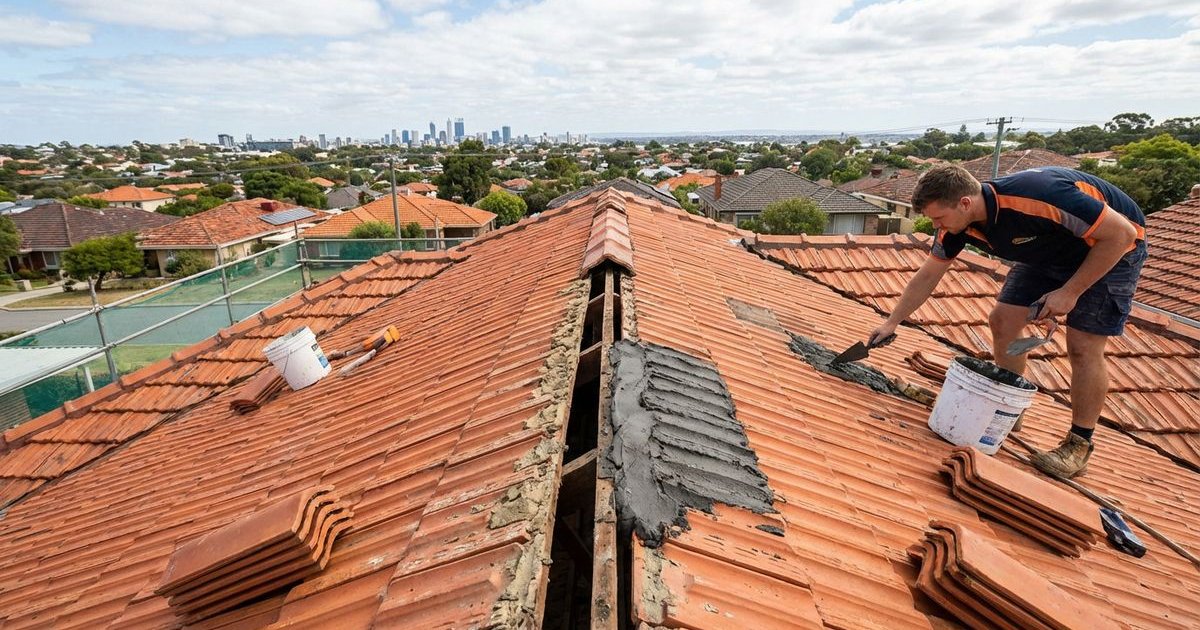
Re-Bedding vs Re-Pointing: Which Does Your Roof Need?
When a roofer tells you that your ridge capping needs re-bedding or re-pointing, it is easy to assume they are talking about the same thing. They are not. These are two distinct repair processes with different scopes, costs, and outcomes. Choosing the right one is essential for getting a lasting result on your Perth roof, especially with our unique coastal weather.
This guide explains what each process involves, when each is appropriate, and how much you should expect to pay in 2026.
Understanding the Two Layers
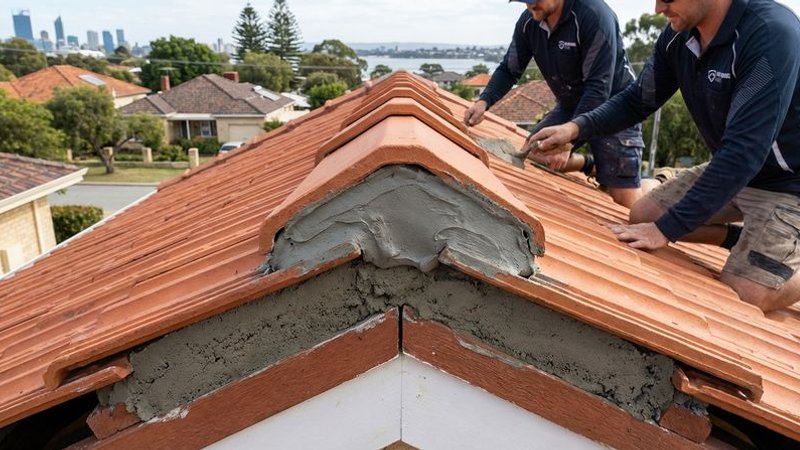
Ridge capping on a tiled roof has two mortar layers, each serving a different purpose. We see many homes in the Northern Suburbs where confusion about these layers leads to ineffective repairs.
The Bedding Layer (The Foundation)
The bedding is the thick base layer of mortar that sits between the ridge cap and the roof tiles below. Think of it as the foundation. It holds each ridge cap firmly in position, creates the correct alignment, and provides the structural bond between the cap and the roof.
Bedding mortar is typically 20mm to 40mm thick and is applied as a wet mix that the ridge cap is pressed into and adjusted before it sets. We typically use a mix of specific sand (often yellow brickies sand) and cement to ensure it cures hard enough to support the weight of the caps. Once cured, it creates a solid seat for the cap.
The Pointing Layer (The Seal)
The pointing is the visible mortar seal applied along the edges of each ridge cap after the bedding has set. It fills the gap between the cap edges and the surrounding tiles, creating a weatherproof seal that prevents rain, wind, and debris from entering.
Pointing is a thinner application — usually 10mm to 15mm — and is what you see from the ground when you look at the ridge line. In the past, this was just more cement, but today we use specialized compounds designed to handle movement.
What Is Re-Pointing?
Re-pointing is the process of removing the old, deteriorated pointing along the edges of the ridge caps and replacing it with new pointing material. The ridge caps remain in place on their existing bedding mortar.
The Process
- Preparation: The roofer carefully removes all cracked, loose, or crumbling pointing from along the edges of each ridge cap.
- Cleaning: The exposed surfaces are cleaned to ensure good adhesion.
- Application: New pointing compound is applied to seal the edges.
- Finishing: The compound is smoothed to create a neat, weather-tight finish.
Pro Tip: We always ensure “weep holes” are maintained during this process. These small drainage points allow any moisture that gets behind the bedding to escape. If a roofer seals these up, water can get trapped and leak into your ceiling.
When Re-Pointing Is Sufficient
Re-pointing on its own is the right choice when:
- The bedding mortar underneath is still solid and intact.
- Ridge caps are firmly seated and do not move when tested.
- Only the surface pointing has cracked, shrunk, or fallen away.
- The roof is relatively young (under 15 years) with good original workmanship.
Typical Cost in Perth (2026 Estimates)
Re-pointing alone typically costs between $25 and $35 per linear metre of ridge line. For an average Perth home with 20 to 30 metres of ridge line, this works out to roughly $500 to $1,050 for the complete job.
What Is Re-Bedding?
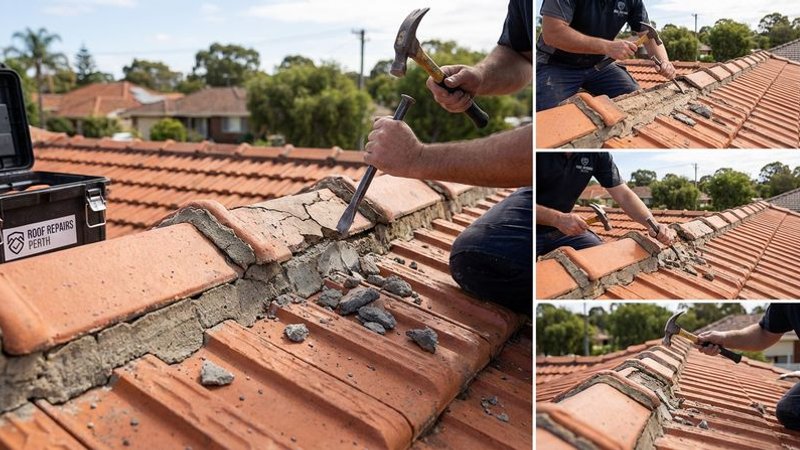
Re-bedding is a more comprehensive repair that involves removing each ridge cap entirely, stripping away all the old bedding mortar, applying fresh bedding, re-seating the cap, and then applying new pointing over the top.
The Process
- Removal: Each ridge cap is carefully lifted off the roof.
- Strip Down: All old bedding mortar is removed from both the cap and the tile surface below.
- Preparation: The surfaces are cleaned and prepared for new mortar.
- Bedding: Fresh bedding mortar is applied in the correct thickness, often using a “bedding rail” to ensure a perfectly straight line.
- Placement: The ridge cap is pressed into the new bedding and aligned properly.
- Pointing: Once the bedding has set sufficiently, new pointing is applied along the edges.
- Completion: The finished work is cleaned and inspected.
When Re-Bedding Is Needed
Re-bedding is required when:
- The bedding mortar has deteriorated, crumbled, or separated from the tiles.
- Ridge caps are loose, rocking, or can be lifted by hand.
- You can see gaps between the underside of the ridge cap and the tiles below.
- Large chunks of mortar have fallen from the ridge line (you may find them in the gutters or on the ground).
- The roof is 20+ years old and the original bedding has reached the end of its life.
- Previous repairs used only pointing over failed bedding.
Typical Cost in Perth (2026 Estimates)
Full re-bedding and re-pointing typically costs between $40 and $80 per linear metre. For an average Perth home, expect to pay approximately $1,200 to $2,800 depending on the length of the ridge line, roof accessibility, and the number of hip ridges.
Comparison: Re-Pointing vs. Re-Bedding
This table outlines the key differences to help you decide which option fits your situation.
| Feature | Re-Pointing Only | Full Re-Bedding & Re-Pointing |
|---|---|---|
| Primary Goal | Restore the waterproof seal | Restore structural integrity & seal |
| Linear Metre Cost | $25 - $35 | $40 - $80 |
| Involves Lifting Caps? | No | Yes |
| Typical Lifespan | 10+ years (if bedding is good) | 15-20+ years |
| Best For | Surface cracks, cosmetic wear | Loose caps, crumbling mortar, older roofs |
How to Tell Which You Need
If you are unsure whether your roof needs re-pointing only or full re-bedding, here are some practical checks.
The “Screwdriver Test”
One simple way to check the condition of your bedding is to gently push against the side of a ridge cap with the handle of a screwdriver (or your hand). If the cap rocks, moves, or makes a grinding sound, the bedding has failed. It needs to be re-bedded. If it holds firm, you likely only need re-pointing.
Signs You Likely Only Need Re-Pointing
- The pointing is cracked or missing, but the caps feel solid when you push on them.
- Mortar debris on the ground is thin and flaky (surface material only).
- No visible gaps between the underside of the caps and the roof tiles.
- The roof is under 15 years old.
Signs You Need Full Re-Bedding
- Ridge caps move, rock, or lift when touched.
- Thick chunks of mortar are found on the ground or in gutters.
- You can see daylight through gaps under the caps from inside the roof cavity.
- Previous pointing repairs have cracked again within a year or two.
- The roof is over 20 years old and has never had ridge capping work done.
The most reliable way to determine what is needed is a professional inspection. We test each ridge cap by applying gentle pressure to check whether the bedding is sound or whether the cap is sitting on compromised mortar.
The Critical Mistake: Pointing Over Bad Bedding
One of the most common problems we see on Perth roofs is re-pointing applied over deteriorated bedding. From the outside, the ridge line looks freshly repaired. But underneath, the bedding is crumbling, and the caps are still loose.
This approach fails for several reasons:
- Structural Failure: Pointing relies on the bedding for structural support. If the bedding is weak, the pointing cracks under the cap’s movement.
- Hidden Leaks: Water still enters through the failed bedding even if the surface appears sealed.
- Wasted Money: The homeowner pays for a repair that typically lasts less than two years.
If a roofer quotes you for re-pointing without first inspecting the bedding underneath, ask them specifically about the condition of the bedding layer. A reputable ridge capping specialist will always check the bedding before recommending a scope of work.
Modern Materials Make a Difference
Regardless of whether you need re-pointing or full re-bedding, the material used for pointing makes a significant difference to longevity.
Traditional cement pointing is rigid and will eventually crack again due to Perth’s thermal cycling (hot days and cool nights). We exclusively use modern flexible pointing compound, such as Starpoint or Selleys Point Works. These are engineered to expand and contract with the roof, which dramatically extends the life of the repair.
Most professional roofers in Perth now recommend flexible compound as standard. It is also a requirement under Australian Standard AS 2050 for mechanical fastening in high-wind areas.
For the bedding layer, a quality sand and cement mix with appropriate additives remains the standard. The key is correct mix ratios and adequate thickness to properly support each cap.
Getting the Right Quote
When obtaining quotes for ridge capping work in Perth, make sure each quote specifies critical details.
- Scope: Whether the job includes re-pointing only or full re-bedding and re-pointing.
- Quantity: The total linear metres of ridge line included.
- Materials: The specific type of pointing material to be used (ask for flexible compound by name).
- Replacements: Whether any broken ridge caps will be replaced and the cost of replacement caps.
- Guarantee: The warranty period for workmanship.
This level of detail allows you to compare quotes on a like-for-like basis and ensures there are no surprises when the roofer starts work.
Next Steps
If you have noticed crumbling mortar, loose ridge caps, or gaps along your ridge line, do not wait for the next storm season. Contact our team for a free ridge capping inspection. We will assess both the pointing and bedding layers, explain exactly what is needed, and provide a clear, itemised quote.
Need Help with Your Roof?
Get a free inspection and quote from Perth's trusted roof repair specialists. No call-out fee.