How to Deal with Moss and Lichen on Your Perth Roof
If you live in Perth, you know how deceptive our climate can be. We enjoy months of scorching dry heat, but the moment the winter rains hit between May and August, our roofs turn into a perfect breeding ground for moisture-loving organisms. You might have spotted those fuzzy green patches or stubborn orange crusts starting to form, especially if you live in established leafy suburbs like Duncraig, Carine, or near the coast in Ocean Reef.
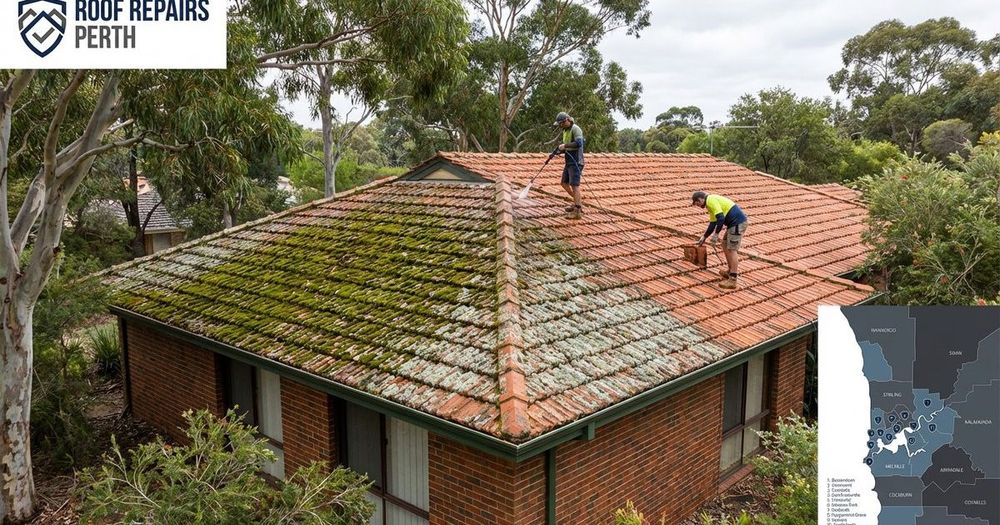
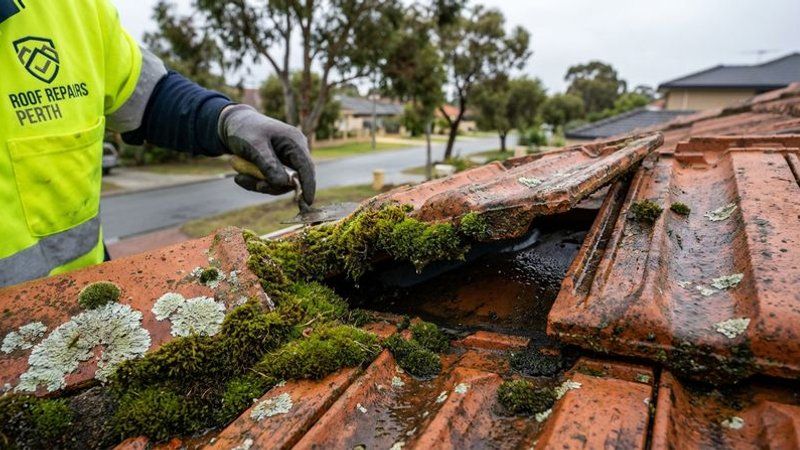
Many homeowners we speak to assume this growth is just “part of nature” or a cosmetic annoyance. Going by what we pull off roofs on site, it is actually a silent alarm bell for your roof’s health. That moss is holding moisture right against your tiles like a wet sponge, while lichen is actively eating into the surface.
In this guide, we will break down exactly why this happens in our local climate and walk you through the specific removal methods that actually work without destroying your tiles. We will also cover the crucial “Quats vs. Bleach” decision you need to make and explain how to stop it from coming back next winter.
Why Moss and Lichen Thrive in Perth
It seems contradictory that moss would thrive in a city famous for its sunshine. The issue isn’t our total annual rainfall, which averages around 730mm, but rather when it falls. Perth experiences intense, concentrated wet periods during winter where roof tiles barely get a chance to dry out between showers.
We find that certain local factors create a “perfect storm” for biological growth:
- The “Marmion Avenue” Effect: Suburbs close to the coast often deal with higher humidity and salt-laden air, which feeds Xanthoria (that bright orange/yellow lichen) on terracotta tiles.
- Canopy Shade: In older northern suburbs like Kingsley or Joondalup, mature Eucalypts and non-native trees block the winter sun. This shade prevents the UV radiation that naturally kills spores.
- Texture Traps: Concrete tiles, which are standard in many Perth builds from the 80s and 90s, have a rough surface that catches windblown spores from nearby parklands.
- Nutrient Build-up: Pollen and dust settle in the valleys of your roof during our dry summer. When the first rains come, this debris turns into a nutrient-rich compost that feeds the first bloom of moss.
Once these organisms take hold, they accelerate their own growth. A small patch of moss can absorb up to 20 times its own weight in water, creating a permanent damp spot that allows the colony to expand rapidly across your roof.
The Structural Risks to Your Home
Ignoring these patches is a gamble with your roof’s integrity. We often see extensive damage that could have been prevented with a simple clean two years earlier.
Lichen Etching: Lichen is a symbiotic relationship between algae and fungus. To survive, it secretes oxalic acid which effectively eats into the mineral base of your tiles. On concrete tiles, this strips the protective slurry coat. On terracotta, it pits the glaze and creates micro-pores that make the tile more brittle over time.
Water Tracking and Leaks: Moss grows in the vertical water channels (the “water courses”) of your tiles. This blockage forces rainwater sideways instead of down into the gutter. This diverted water creates leaks and often runs into the roof cavity, damaging insulation and ceilings.
Mortar Failure: The roots (rhizoids) of moss search for calcium-rich environments. They love digging into the cement bedding of your ridge caps. As they expand, they crack the mortar. This damage frequently leads to a need for professional ridge capping repair long before the rest of the roof wears out.
Safe Removal Methods: A Comparative Guide
Removing growth from a roof is not as simple as blasting it with water. In fact, aggressive cleaning is the number one cause of tile damage we encounter. You need to choose the right method for your specific tile type and the severity of the infestation.
1. Manual Removal (Dry Brushing)
This is the first line of defence for heavy, established moss clumps. Using a stiff nylon brush (never wire) or a plastic scraper, you physically dislodge the bulk of the growth.
The Pro Insight: We always recommend doing this on a dry day when the moss is brittle. If you try this when the moss is wet and slimy, you will likely just smear it into the tile pores. Brush downwards towards the gutter to prevent pushing debris up under the tile laps.
2. Chemical Treatment (The “Quat” Method)
For most Perth homes, this is the gold standard for long-term control. This method uses Benzalkonium Chloride (a Quaternary Ammonium Compound or “Quat”). It is a biocide that kills the spores and leaves a residual “bio-shield” on the tile.
How it works: You saturate the dry roof with the solution and leave it. You do not rinse it off. Over the next 6 to 12 months, the rain reactivates the treatment, cleaning the roof slowly and gently.
Best for: Homeowners who want a low-impact solution and are patient enough to wait a few months for full results. It is the safest option for older, fragile terracotta.
3. Soft Washing (Sodium Hypochlorite)
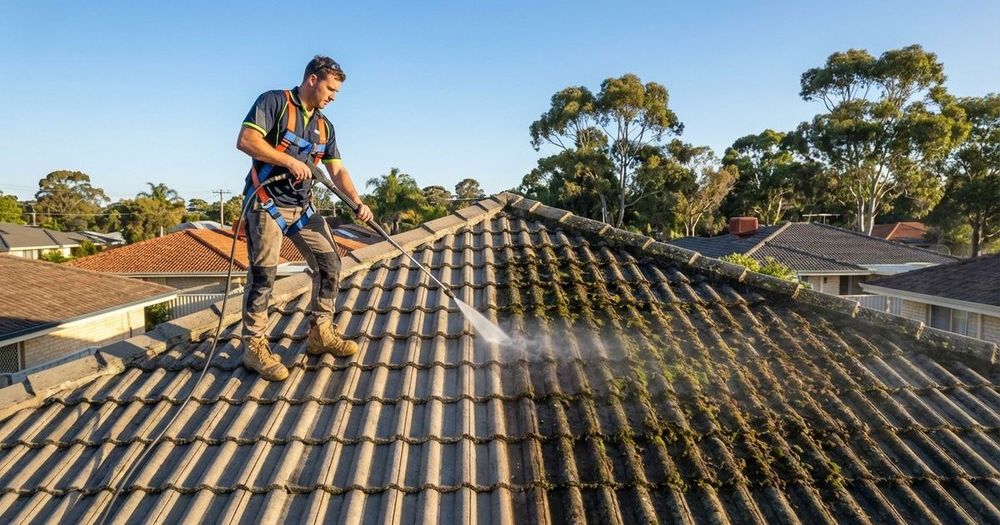
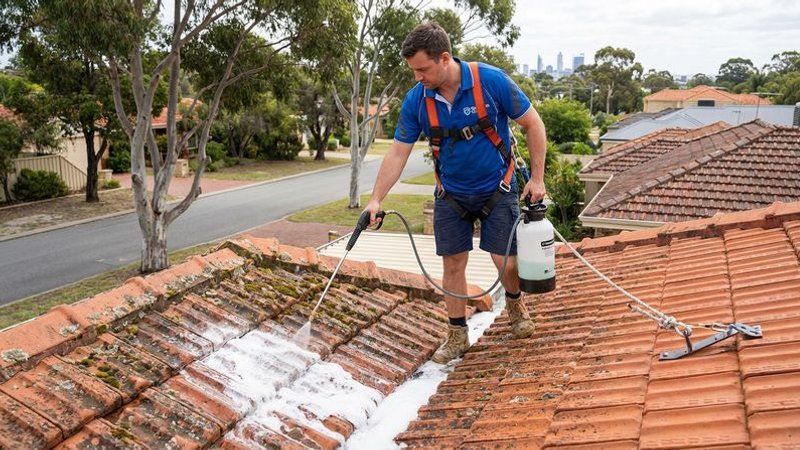
Soft washing uses a stronger cleaning solution (usually based on Sodium Hypochlorite) applied at low pressure. Unlike the “Quat” method, this produces instant results. The chemical kills the organism immediately, and the residue is rinsed away after a short dwell time.
The Critical Difference: This is not pressure washing. Soft washing relies on the chemistry to do the work, not the force of the water. The pressure used is roughly equivalent to a standard garden hose.
Comparison: Which Method Fits Your Needs?
| Feature | Manual Removal | Chemical Treatment (Quats) | Soft Washing |
|---|---|---|---|
| Instant Results? | No (Removes bulk only) | No (Takes 6-12 months) | Yes (Same day) |
| Risk of Damage | Low | Very Low | Low (if done by pros) |
| Longevity | Short (Spores remain) | Long (Residual protection) | Medium |
| Best Application | Pre-cleaning prep | Maintenance & Prevention | Selling home / Instant curb appeal |
Methods to Avoid (The “Do Not Touch” List)
We strongly advise against these common DIY mistakes. They often result in expensive repair bills.
- High-Pressure Cleaning: Blasting tiles with 3,000+ PSI strips the surface coating from concrete tiles, reducing their lifespan by years. It also forces water into the roof cavity, soaking your insulation.
- Bleach without Rinsing: Pouring straight household bleach on your roof is dangerous. The runoff can kill your garden plants (especially sensitive Perth natives like Grevilleas) and corrode your metal gutters and downpipes.
- Wire Brushes: These are too abrasive. They scratch the surface of the tile, creating deep grooves. These grooves hold more moisture in the future, meaning the moss will grow back twice as fast.
Prevention Strategies
Once you have a clean roof, you want to keep it that way.
Install Sacrificial Metal Strips: Copper is toxic to moss and lichen. By installing a copper strip along the ridge line of your roof, every time it rains, trace amounts of copper ions wash down over the tiles. This creates a sterile environment where spores cannot germinate. Zinc strips are a cheaper alternative, but in our experience, copper is far more effective for Perth conditions.
Improve Airflow: Moss hates drying winds. Trimming back overhanging branches from trees like Peppermint or Jacaranda will increase UV exposure and airflow. This simple step is often enough to stop growth on south-facing slopes.
Regular Maintenance Schedule: Treating your roof with a biocide every two years is much cheaper than a full restoration. We consider this a core part of effective roof maintenance that extends the life of your home’s waterproofing.
Safety First: A Warning on DIY
Roof work is inherently dangerous, and Perth’s single-story homes are higher than they look.
The Electrical Hazard: In Western Australia, many power lines attach directly to the fascia or gable of the roof. WorkSafe WA regulations are strict for a reason. Before entering any roof space or working near service lines, you must ensure the area is safe. We always isolate power where necessary to prevent accidental contact.
Fall Risks: Moss is incredibly slippery. It is like walking on ice. If your roof has moderate to heavy growth, walking on it without a harness and anchor point is a serious risk.
Our team is fully trained in safety protocols and equipped to handle these hazards. We can assess your roof, identify the specific type of growth, and recommend a treatment plan that fits your budget. If you are concerned about the state of your tiles, contact us for a professional assessment.
Need Help with Your Roof?
Get a free inspection and quote from Perth's trusted roof repair specialists. No call-out fee.