Why Flexible Pointing Compound Outlasts Traditional Mortar on Perth Roofs
If you have ever had your ridge capping re-pointed with traditional cement mortar, seeing cracks reappear within a few years is incredibly frustrating. We see this issue constantly on homes throughout the Northern Suburbs. The problem is rarely the workmanship of the tiler. Traditional mortar simply cannot handle the specific physical demands of the Western Australian climate.
Flexible pointing compound changes the equation entirely. Our team considers it the single most important upgrade for any tiled roof in Perth. Here is why this modern material has become the industry standard and how it outperforms the old methods.
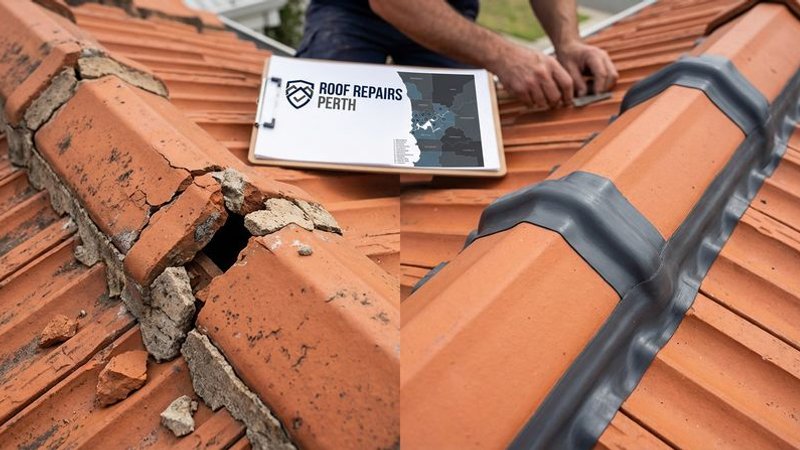
The Problem with Traditional Cement Mortar
Cement mortar is a rigid material that forms a hard, brittle bond once it cures. On a stationary wall, this rigidity is an advantage. But your roof is a dynamic structure that moves significantly every single day.
Thermal Movement
Perth experiences some of the most aggressive thermal cycling in the country. We routinely measure roof surface temperatures exceeding 70 degrees Celsius on a standard summer day in suburbs like Joondalup or Wanneroo. By 4:00 AM the next morning, that same surface often cools to 15 degrees or lower.
This massive temperature swing forces every tile, flashing, and timber batten to expand and contract. The entire ridge line shifts and flexes with these daily thermal cycles.
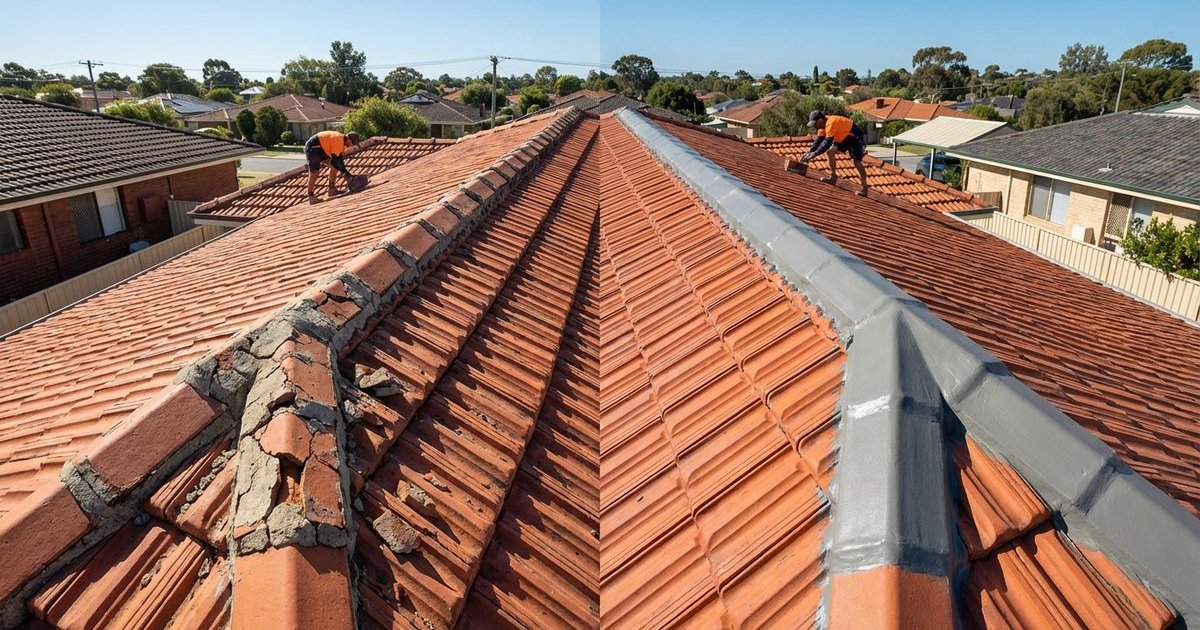
Traditional cement mortar cannot flex with this movement. It remains rigid while the roof beneath it shifts. hairline cracks inevitably form as the bond breaks. These small fractures widen over time until the mortar chunks separate completely from the tile.
Perth vs Other Climates
The failure rate is noticeably higher here than in other capital cities. Melbourne and Sydney generally experience milder daily temperature fluctuations and lower peak UV intensity. Our intense UV radiation dries out standard mortar mixes much faster, accelerating the crumbling process. A mortar ridge that lasts 20 years in Tasmania might fail within 7 years in Alkimos or Hillarys.
What Is Flexible Pointing Compound?
Flexible pointing is a polymer-modified compound specifically engineered to anchor ridge caps while accommodating movement. We use it to create a mechanical and chemical bond that is vastly superior to simple cement.
Key Properties
Modern compounds like Starpoint or Roofbond meet the strict AS 2050:2018 standards for roof tile installation. They offer several distinct advantages:
- Extreme Elasticity: The compound stretches and compresses to absorb roof movement without snapping.
- High Adhesion: Tests show it has 20 to 30 times the adhesive strength of standard mortar.
- C3 Wind Rating: Most quality brands are rated to withstand cyclonic wind conditions suitable for coastal areas.
- Fade Resistance: The colour is baked into the polymer, preventing the rapid fading seen with painted mortar.
How It Works
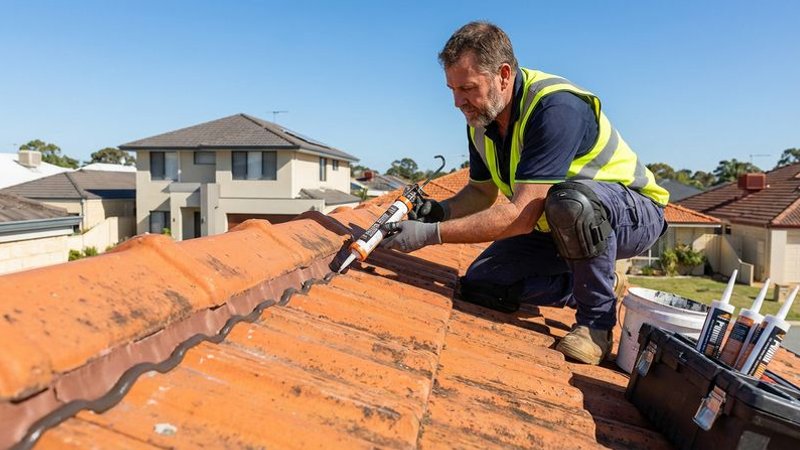
The application process mimics traditional pointing but the result is chemically different. Our technicians apply the compound over the bedding to seal the gap between the cap and the tile. Once it cures, it feels solid to the touch but retains a rubber-like core.
Think of it as a shock absorber for your ridge caps. When your roof trusses expand in the January heat, the flexible pointing stretches rather than breaks. Traditional mortar is like a dry twig that snaps under pressure, while flexible compound acts like a strong rubber band.
Real-World Performance Advantages
Longevity
Standard cement mortar in Perth typically requires attention every 8 to 10 years. We find that a high-quality flexible pointing job can easily last 15 to 25 years. This extended lifespan significantly lowers your cost of ownership over the decades.
Storm Resistance
Perth’s winter storms bring horizontal rain and strong gusts that test every join in your roof. Flexible pointing maintains a watertight seal even when wind pressure lifts or pushes against the ridge caps. Old mortar with micro-cracks will allow water to wick into the roof cavity during these high-pressure events.
Reduced Pest Entry
Small gaps in cracked mortar are open doors for local pests. We frequently find that mice, rats, and large spiders use these mortar failures to access roof spaces. The continuous, unbroken seal of a flexible compound effectively blocks these entry points for the life of the product.
Compatibility with All Tile Types
This material bonds aggressively to almost any roofing surface. Whether you have a terracotta roof in Subiaco or concrete tiles in Baldivis, the compound works effectively. We can also colour-match it to virtually any existing roof shade, from Charcoal and Terracotta to more specific hues like Mid-Grey or Chocolate.
Flexible Pointing vs. Traditional Mortar
Making the right choice depends on understanding the tangible differences. The table below outlines why the shift to flexible compounds has been so sweeping.
| Feature | Traditional Cement Mortar | Flexible Pointing Compound |
|---|---|---|
| Flexibility | Rigid (prone to cracking) | Highly Elastic (moves with roof) |
| Adhesion | Low (mechanical lock only) | High (Chemical & Mechanical bond) |
| Warranty | Typically 1-2 years | Typically 10+ years |
| Maintenance | Frequent repointing needed | Low maintenance |
| Wind Rating | Low (N1/N2) | High (up to C3 Cyclonic) |
Common Questions About Flexible Pointing
Is It More Expensive Than Cement?
The material itself costs more than a bag of sand and cement. You should expect to pay between $25 and $35 per linear metre for a professional repointing job. While the upfront cost is slightly higher, the 10-year manufacturer warranty and lack of repeat repairs make it cheaper in the long run.
Can It Be Applied Over Existing Mortar?
You can sometimes apply it over sound mortar, but we rarely recommend it as a long-term fix. A “cap over” job relies on the old, failing mortar beneath it. If the bedding is loose, we must perform a full re-bedding to ensure the foundation is solid before applying the flexible pointing.
Does It Work in Coastal Areas?
Yes, it is actually the preferred solution for coastal suburbs. Salt spray in areas like Sorrento and Mindarie eats away at the lime in traditional cement. The polymer base of flexible pointing is impervious to salt corrosion, making it ideal for homes near the ocean.
Will It Match My Roof Colour?
Leading brands offer pre-mixed colours to match the vast majority of Australian roof tiles. We carry colour charts from major suppliers like Starpoint and Dulux to ensure the repair blends seamlessly with your existing roofscape.
What to Ask Your Roofer
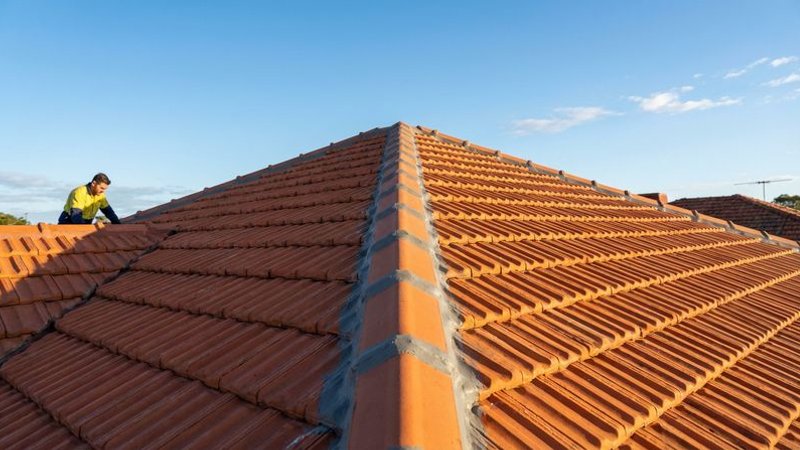
If you are gathering quotes for ridge capping repairs, ask these specific questions to ensure you get a modern, durable result:
- Are you using a flexible pointing compound or just cement? Be wary of any quote that specifies “sand and cement pointing” only.
- Which specific brand do you use? Professional grade products include Starpoint, Roofbond, and Westflex.
- Is the work compliant with AS 2050:2018? This standard governs the installation of roof tiles and requires specific mechanical or adhesive fixing methods.
- Does the quote include re-bedding? As noted in our re-bedding vs re-pointing guide, pointing over loose bedding is a waste of money.
- What is the warranty period? A confident installer using flexible compounds should offer at least a 7 to 10-year workmanship warranty.
The Bottom Line
Perth’s climate is too harsh for outdated roofing methods. We see the evidence of this every week in the form of cracked mortar and water-damaged ceilings. Flexible pointing compound is not just a new trend; it is the necessary engineering response to our unique thermal conditions.
If you suspect your ridge caps are failing, do not wait for the first winter storm to find out. Contact us today for an inspection. Our team will assess your current pointing and provide a clear, long-lasting plan to secure your roof.
Need Help with Your Roof?
Get a free inspection and quote from Perth's trusted roof repair specialists. No call-out fee.